Child prodigy, pride of a nation

When Sachin Tendulkar was selected for his first tour
with the Indian Test side in 1989, one feared for him. He seemed just a little
boy. He was one, at just sixteen years of age. One felt that he was being
pushed into the lion’s den, for that series was against arch rivals Pakistan
with their fearsome battery of pacemen - Imran Khan, Wasim Akram and Waqar
Younis. But the manner in which the kid squared up to these awesome fast
bowlers showed that someone in the selection committee indeed had a discerning
eye.
Tendulkar
lived up fully to the promise. Immediately, he carved out a permanent place in
the Indian line-up. In the 1991-92 tour of Australia, preceding the fifth World
Cup, he broke away from the rest, and pundits already began rating him as the
team’s best batsman. The World Cup showed just why.
Sachin
Tendulkar’s man-of-the-match awards in the World Cup.
1. Versus Pakistan, Sydney, 1992
The
needle encounter with Pakistan created its own inevitable drama. Tendulkar
chose the occasion to come into his own. He put on 46 for the fourth wicket
with schoolmate Vinod Kambli, and combined with Kapil Dev to add another 60 for
the sixth wicket. Tendulkar’s unbeaten 54, comprising 3 boundaries in a stay of
62 deliveries, set up India’s victory, helping post a total that could be
defended on the lively Sydney track. This match-winning performance won him his
first World Cup man-of-the-match award.
2. Versus
Zimbabwe, Hamilton, 1992
Tendulkar top-scored again in the next match. A fine
99-run stand with Sanjay Manjrekar took the rain-affected game away from
Zimbabwe. His superb 81 off just 77 balls, studded with 8 fours and a six,
earned him a second successive man-of-the-match prize.

3. Versus Kenya, Cuttack, 1996
There
was a soft opening fixture with Kenya in the 1996 World Cup, and Tendulkar led
the charge with a 163-run stand with Ajay Jadeja. It was not only India’s best
opening partnership in the World Cup, surpassing the mark of 136 set up by
Sunil Gavaskar and Krishnamachari Srikkanth against New Zealand in 1987, but
also the country’s highest for any wicket hitherto in the premier event.
Tendulkar stepped on the pedal right from the start, hitting his first fifty
off just 48 balls. He slowed visibly on the threshold of his first World Cup
century, making doubly certain that he reached the coveted milestone. This was
his fifth hundred in One-day Internationals, all of which came in the previous
18 months after he began opening the innings. Still in no mood to throw away
his wicket, he escorted his side to an easy victory. Tendulkar’s unbeaten 127
from 138 deliveries was made up of 15 sizzling boundaries and one hit over the
ropes. This was then India’s second-highest individual score in the World Cup
after Kapil Dev’s 175 not out in 1983. He was named man-of-the-match.
4. Versus West Indies, Gwalior, 1996
The next match at Gwalior was billed as a clash of the
two star batsmen, Tendulkar and Brian Lara; and also a confrontation between
Tendulkar and the great fast bowling pair of Curtly Ambrose and Courtney Walsh.
Neither of these happened. With the West Indies setting a modest target of 174,
Tendulkar played a sedate innings, scoring 70 off 91 balls, having struck 8
fours before being run out. He had put on 79 crucial runs for the third wicket
with Navjot Singh Sidhu. Tendulkar claimed his second man-of-the-match award in
succession.
He
became a trailblazer in the 1996 event, the first to score more than 500 runs
in a single World Cup. He had a tremendous run of scores: 127 not out, 70, 90,
137, 3, 31 and 65; two centuries and three fifties in seven matches. Tendulkar
became the highest run-getter in any single World Cup with his 523 runs, averaging
87.16, a mark that was to remain till he himself bettered it in 2003.
5. Versus Kenya, Bristol, 1999
The
year 1999 was an unhappy one for Tendulkar in many ways. He developed back
trouble in the early months, and for the first time a shadow was cast on his
career. The contemptuous pull shot off the front foot had to be eliminated from
his repertoire to ease pressure on his back. Then just as the World Cup began,
his father passed away. Tendulkar had to return to India, missing the fixture
with Zimbabwe. He rejoined the tournament in traumatic circumstances. A debate
followed about whether he should continue to open the innings in conditions
where the ball moved around. As a result he was shifted up and down the order.
Tendulkar had opened in the first match against South Africa and raised 67 with
Sourav Ganguly before he was caught behind off Lance Klusener for 28. He missed
the second game due to his bereavement. India lost both the matches.
On
his return from home, Tendulkar walked in at no.4 to face the Kenyan attack, in
a sombre frame of mind. He put together his concentration, and got down to work
like a true professional. Soon he was stroking the ball in his magical way.
Even the dark clouds lifted and made way for bright sunshine as if in reverence
to the little genius. Rahul Dravid too flowered in his company. Tendulkar
stepped on the accelerator after reaching his half-century. He raced to his
hundred in 84 balls, the fastest by an Indian in the World Cup hitherto,
surpassing another legend Sunil Gavaskar’s century off 85 balls against New
Zealand in 1987. Tendulkar’s second fifty came in only 30 balls.
The partnership reached mammoth proportions, the pair
still not separated after having added 237 runs when the innings ended. This
was the highest for any wicket in the World Cup, breaking the previous record
of 207, also for the third wicket set by Mark and Steve Waugh, coincidentally
against Kenya in 1996. It was also a record for the third wicket in all One-day
Internationals, beating the previous best of 230 by Pakistanis Saeed Anwar and
Ijaz Ahmed against India in 1998. Tendulkar was unbeaten with an explosive 140
off 101 balls, slamming 3 sixes and 16 fours in a man-of-the-match performance.

6. Versus Zimbabwe, Harare, 2003
As the Indian side sought to redeem itself in the 2003
World Cup, it faced Zimbabwe who were no longer the force they were four years
earlier. Tendulkar and his young clone Virender Sehwag put their bowling to the
sword in a rousing 99-run opening stand in 100 deliveries. The master continued
to blaze away after the apprentice was dismissed. Dinesh Mongia was essentially
a bystander in a 43-run second-wicket partnership. A delivery from left-arm
spinner Grant Flower rolled on to the stumps off Tendulkar’s defensive blade. He
left, having hit 81 off 91 balls with 10 exquisite boundaries. India eventually
triumphed easily and Tendulkar wrested his sixth man-of-the-match award in the
World Cup, the maximum at that stage, breaking away from the pack of Vivian
Richards, Graham Gooch and Lance Klusener.
7. Versus Namibia, Pietermaritzburg, 2003
As the Indian campaign gained momentum, there was a
picnic before the stern tests. The Namibians were in no position to challenge
an indignant side hungry for success. Sehwag dazzled briefly, and once Sourav Ganguly
joined Tendulkar, there was a deluge. Though Tendulkar was not at his fluent
best, the pair just waded into the amateur trundlers. Dropped at 32, the little
champion perhaps found it hard to motivate himself against the pop-gun attack,
but bludgeoned it nonetheless. He raised his 34th One-day
International hundred, racing still far ahead of the rest. It was his fourth
ton in the premier event, the most at that stage alongside Mark Waugh. The
second-wicket stand logged up 244 runs before Tendulkar was out, having crashed
152 off 151 deliveries with 18 hits to the fence. This was his highest score in
the World Cup, and the partnership was second-best ever for any wicket in the
tournament after the 318-run Ganguly-Dravid duet of 1999. Tendulkar picked up
his second consecutive man-of-the-match prize, his third such feat in the World
Cup.
8. Versus
Pakistan, Centurion, 2003
If India were getting their
act together in this tournament, the Pakistani side was not. But in the mother
of all cricketing battles, form counts for little. The team that soaks in the
pressure better on the day invariably triumphs. This contest had two entire
nations transfixed. Planeloads of spectators took off for South Africa,
television ratings soared, and almost every other activity came to a
standstill. Pakistan seized the initiative with a score of 273 for seven.
Tendulkar was not going to let go this opportunity to display his class as well
as temperament. The great Wasim Akram opened the bowling and Tendulkar drove
the third delivery off the back foot through the covers into the pickets.
Sehwag also got into the act. From then on there was only one team in the
match. Shoaib Akhtar came on at the other end. Tendulkar blasted him for a six
and two fours off the last three balls. The Rawalpindi Express conceded 18 runs
off his first over and was promptly taken off. Tendulkar had established his
ascendancy.
It took only five overs to rattle up 50 on the board.
Sehwag and Sourav Ganguly were dismissed off successive balls but Tendulkar
zoomed to his own fifty in a matter of 37 balls. Mohammad Kaif helped put on a
brisk 102 in 15.5 overs. Though cramps began to hamper Tendulkar, he refused a
runner till he could hardly move. Meanwhile, he brought up his 12,000th
run in One-day Internationals, playing his 300th innings in 309
matches. He now stood alone on a pedestal, second-placed Mohammad Azharuddin
parked more than 2,600 runs behind. When Akhtar let go a nasty bouncer the
decapitated Tendulkar could only instinctively fend a catch to point. He fell
for a magnificent 98, having faced just 75 deliveries and rocketed 12 fours and
a six. This was arguably Tendulkar’s best innings in the World Cup. India had
raced to 177 for four in the 28th over. Dravid and Yuvraj Singh had
only to bat sensibly from then on, which they did. India maintained their
hundred percent World Cup record over Pakistan. There was only one claimant for
the gold watch awarded to the man-of-the-match. Tendulkar had now walked away
with three such glittering prizes in the last four matches.
Enthralled by his next innings against Sri Lanka,
Australian great Greg Chappell wrote in his column in The Hindu: “Make no
mistake, Tendulkar is a genius! Tendulkar’s combination of deft touches and raw
power is virtually unmatched in the game today. Adam Gilchrist, Matthew Hayden
and Brian Lara can certainly match his power though they don’t quite match his
exquisite skill and versatility. The versatility is an innate, instinctive
skill. Bradman used the laws of physics better than anyone else, then or now.
He used the energy created by the bowler and redirected the ball with brilliant
footwork and incredible wrist work. Tendulkar goes closest to emulating him,
but has the added advantage - delivered by the heavier modern bat - of being
able to block the ball back past the faster bowlers more quickly than it was
delivered. Tendulkar’s innings of 97 was as intimidating to most of the Sri
Lankan bowlers, as it was for the Pakistanis at Centurion Park.” There could be
no greater tribute, coming as it did from one who was himself one of the finest
batsmen in history.
India lost to the unstoppable Australians in the final
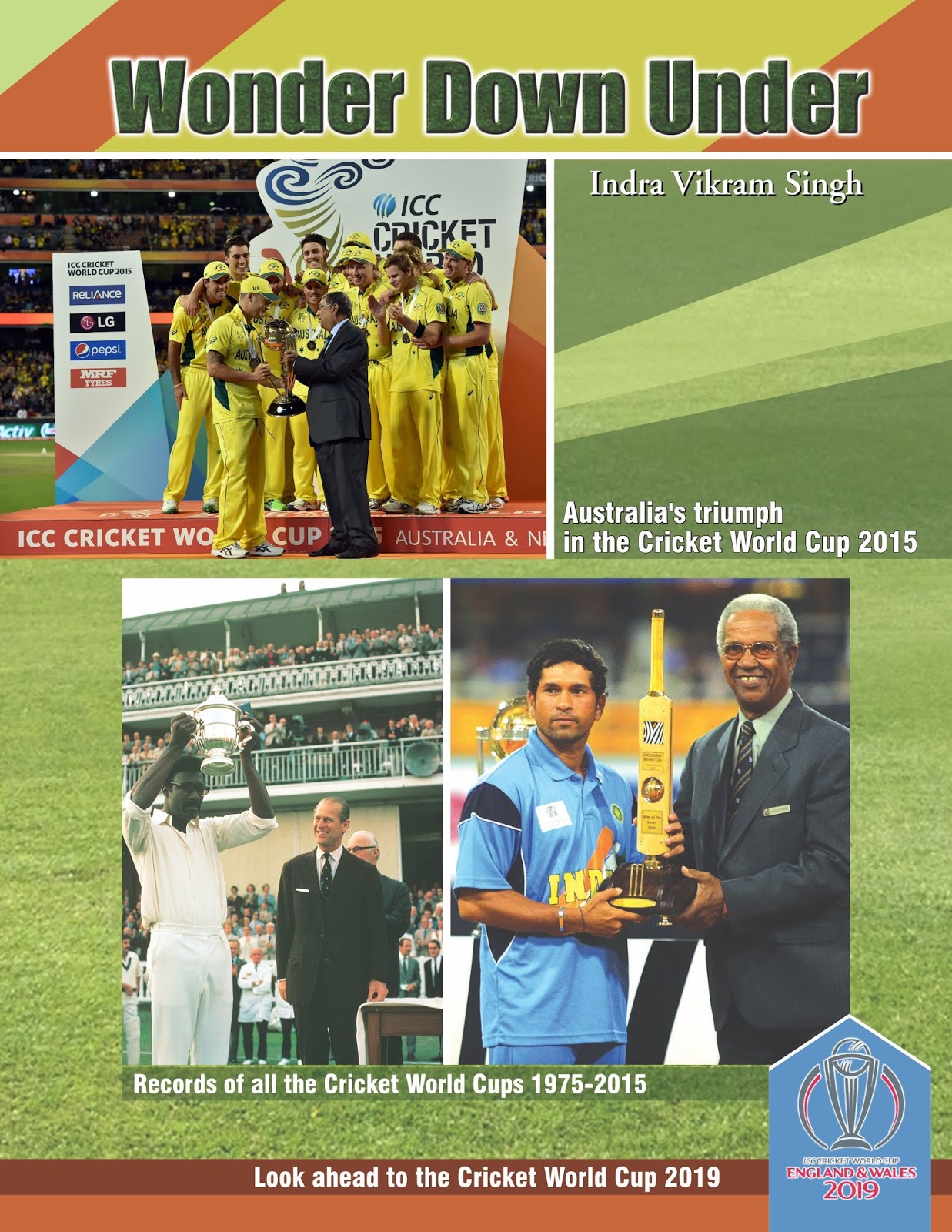
but Tendulkar won the Golden Bat, his award for being adjudged the
player-of-the-tournament, which was presented to him by none other than Sir
Garfield Sobers. In two World Cups - 1996 and 2003 - Tendulkar was the leading
run-getter of the tournament. His 673 runs in 11 matches in the 2003 event laid
down a new benchmark in the World Cup, and his aggregate of 1732 was then far
ahead of the rest, none of whom had topped 1100.

9. Versus Pakistan, Mohali, 2011
Came the high-voltage encounter at Mohali, World Cup 2011
semi-final between India and Pakistan, a heart-stopper in the extreme, watched
by the prime ministers of both countries. Two overs produced 6 runs, and then
Sehwag turned on Umar Gul, bludgeoning him for 5 boundaries in the 3rd
over. Sehwag continued on his merry way, having had most of the strike. He fell
leg-before at 48, having crashed 9 boundaries in his 38 off 25 balls.
With Sehwag’s departure, Tendulkar held centre-stage.
He soon added three quick boundaries to an earlier one, but this hurricane
start had camouflaged the uneven character of the wicket. As the ball lost its
shine and hardness, it began to grip the surface and lose pace. Run-making
became a struggle, which was reflected in Tendulkar’s resilient and fortunate
innings. The Umpire Decision Review System (UDRS) helped him survive
leg-before-wicket and stumping appeals off successive Saeed Ajmal deliveries.
Misbah-ul-Haq dropped him at mid-wicket and an edge found no fielder at slip,
the ball running away to the boundary. Gautam Gambhir was not so lucky, being
stumped after having helped put on 68 in 13 overs. Soon Tendulkar was put down
by Younis Khan.
Carrying on the battle nevertheless, Tendulkar stroked
two delightful boundaries to raise a fortuitous fifty, having taken on 67
deliveries. As Virat Kohli and Yuvraj Singh departed off consecutive balls from
left-armer Wahab Riaz, Tendulkar had two more slices of luck. Wicketkeeper
Kamran Akmal did not pouch an edge and his brother Umar failed to latch on to a
pull. Eventually, he drove uppishly at Ajmal and the captain Shahid Afridi
latched on jubilantly. Tendulkar had held his concentration through 115
deliveries in this tumultuous journey, having struck 11 fours in his 85 runs.
He had scrapped all the way through, helping India total 260 for nine. In a
match of such significance, and on a wicket of this nature, it was a winning
score. Pakistan fell 29 runs short and a relieved Indian team marched into the
final. At last Tendulkar won a man-of-the-match award in a tournament in which
two of his centuries resulted in a tie and a defeat.
Crowning Glory
The
World Cup 2011 triumph was the crowning glory to the inimitable Sachin
Tendulkar’s cricket career, and for the Indian team which in the past decade
had risen to no. 1 in the world both in Test matches and One-day
Internationals. The celebrations, the fireworks, uncorking of champagne,
tooting of car horns, singing, dancing and merriment were as much for India’s
exhilarating triumph as was for Tendulkar’s awe-inspiring accomplishments.
No
one could have written a better script, and no folk hero deserved more
accolades than this lovable character received on the memorable night of 2nd
April 2011. His teammates paid him glowing tributes and hoisted him on his
soldiers as a whole country leapt with joy. He finished this tournament as the
second-highest rungetter with 482 to his credit, averaging 53.55 and striking
at 91.98 per 100 balls. Only Tillakaratne Dilshan, who touched 500 runs, scored
more. That Tendulkar sustained his brilliant performances through six World
Cups, in adversity and in triumph, is a mind-boggling thought.
To state the obvious, Tendulkar is by far the highest
rungetter in the World Cup with 2278 runs at an average of 56.95 and a
strike-rate of 88.98. To add to his 6 hundreds are an amazing 15 fifties,
including 3 nineties. He has an incredible nine man-of-the-match awards. No one
else has more than five. In the World Cup arena too, Tendulkar has lived up to
his reputation as one of the greatest batsmen to grace this fascinating game.
The maestro has indeed awe-inspiring achievements to his credit.
The lone man to aggregate 15,000 runs in Test matches
and a record 51 hundreds at an average of nearly 54, and the only one to hit up
18,000 runs in One-day Internationals and yet another record 49 centuries at an
average of almost 45 and strike-rate in excess of 86, this inimitable character
has set seemingly impossible benchmarks for coming generations to strive for.
He helped India scale the pinnacle in Tests as well as One-dayers. The only
remaining team goal, to wrest the ICC World Cup, was also achieved in 2011.
https://www.sportskeeda.com/cricket/sachin-tendulkar-s-nine-man-of-the-match-awards-in-the-world-cup
(Author Indra Vikram Singh can be contacted
on email singh_iv@hotmail.com).
Follow his
blogs https://singhiv.wordpress.com/

Published in India
by Sporting Links
ISBN
978-81-901668-4-3
https://www.amazon.in/dp/8190166840