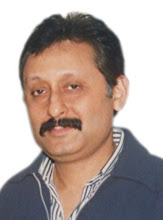
Showing posts with label Prince Indra Vikram Singh of Rajpipla (Teddy). Show all posts

Friday, October 23, 2020

Don’s Century by Indra Vikram Singh: Biography of Don Bradman and a panorama of batting from the 1860s to the present times

 Don’s Century

Biography of Don Bradman

and a panaroma of batting from the 1860s 

to the present times


Published in India by Sporting Links

ISBN 978-81-901668-5-0

Fully illustrated

Paperback French Fold 11 x 8.5 x 0.4 inches

Weight 480 grams

188 pages  

Available at an attractive price on Amazon  https://www.amazon.in/dp/8190166859 


The questions still asked are: how great was Don Bradman actually, was he just a run-getting machine and a statistical marvel, or was he truly the best there has ever been, have there been other batsmen as good or better than Bradman. Don’s Century analyses Bradman’s batting technique, brings forth his amazing achievements at the crease, and assesses the merits of other great batsmen from the 1860s to the present times. Written in the centenary year of the peerless Don Bradman, the book is a celebration of the life and magic of the willow of The Don, and also of the art of batting and indeed the game of cricket. 

The 11-chapter book by Indra Vikram Singh, the only Indian biographer of Bradman, interspersed with stories and comments from legendary writers and cricketers alike, and extensively researched from scores of old publications, has three sections.

The main segment showcases Bradman's days at the crease from Bowral to Sydney, on to Lord's and Leeds, back to Adelaide, and finishing at The Oval in 1948. The legend begins with young Don’s rise to the top, his first fifty and hundred in the backwaters of Bowral, the maiden double century against Wingello and triple ton versus Moss Vale, hundred on first-class debut and on to Test cricket. Bradman’s legendary feats in the Test arena are recalled in all their magnificence, the hundreds in his first Test series, the unprecedented and still-unparalleled triumphs of the Ashes tour of 1930, and annihilation of the West Indies and South African teams.

The saga undergoes a dramatic twist with the vicious Bodyline attack that was devised solely to decimate the genius of Bradman. This chapter carries extracts from letters received by the author from England’s Bob Wyatt who was vice captain to Douglas Jardine during that infamous series.

The aftermath of Bodyline, Bradman’s exhilarating fightbacks on and off the field, how his stirring deeds brought solace to the suffering millions during the Great Depression, and his resilience as captain of Australia are presented lucidly, leading to the sabbatical brought about by the Second World War. The final lap of The Don’s career after the war, the firm hold on the Ashes, his exploits against the first Indian team after the nation’s independence, and finally the 1948 tour of England by his ‘Invincibles’ are described vividly and objectively. The text is supplemented by twenty scorecards detailing Bradman’s finest achievements in the first-class and Test arenas.

A large chapter in the middle is a panorama of batting portraying thirty-four of the best players down the ages, for no story of Sir Donald Bradman can be complete without an appraisal of other giants of the crease.

Commencing with the colossus of the Victorian era Dr. W.G. Grace, the captivating genius Prince Ranjitsinhji, the endearing and enthralling Victor Trumper from Australia, the complete master Sir Jack Hobbs, continuing with the likes of Frank Woolley, Charles 'Governor General' Macartney, Bill Ponsford, Walter Hammond, Stan McCabe, the forbear to West Indies giants George Headley, the brilliant South Africans Bruce Mitchell and Dudley Nourse, India’s Vijay Merchant, Sir Leonard Hutton, Dennis Compton, Neil Harvey, Arthur Morris, the inimitable Ws Sir Frank Worrell, Sir Everton Weekes and Sir Clyde Walcott, the original little master Pakistan’s Hanif Mohammad, the incomparable Sir Garfield Sobers, Graeme Pollock, Barry Richards, Greg Chappell, Sunil Gavaskar, Sir Vivian Richards, arguably New Zealand’s finest Martin Crowe, Steve Waugh, the exhilarating Sri Lankan Aravinda de Silva, and concluding with the champions of the modern era Sachin Tendulkar, Brian Lara, Ricky Ponting and Matthew Hayden, and many more referred to down history, how good they were, and how they compared with each other and Bradman.

They include some of Bradman's favourite players. This is not just a factual or statistical segment, but importantly talks about the epochs and conditions they played in, and also has interesting little tales. It traces the evolution and development of the game from W.G. Grace’s days in the 1860s till the present day.

The third and concluding part explores the vicissitudes of Bradman’s life, trials and tribulations, his persona, way of life and quest for excellence, the detractors, friends and family, post-retirement days and role as cricket administrator, and the final stretch of one of the most amazing stories ever, of a sporting hero and icon beyond compare. A handwritten letter from The Don received by the author Indra Vikram Singh in 1999, and an article based on it that he wrote at Bradman’s demise in 2001, are all featured in this tribute to the unquestioned king of kings of the crease.

There are nearly 100 classic photographs of Bradman and other greats in sepia brown from the top agencies of the world. A comprehensive statistics section highlighting Bradman’s accomplishments and records sums up the inspirational tale. A detailed index makes the book extremely user-friendly.

Contents

Chapter 1 : Born to Conquer

Chapter 2 : The Phenomenon

Chapter 3 : Sinister Plot

Chapter 4 : Truly Immortal

Chapter 5 : At the Helm

Chapter 6 : The Ageing Lion

Chapter 7 : Peerless Rungetter and Other Masters of the Willow

Chapter 8 : Reclusive and Focussed

Chapter 9 : The Game's Ultimate Authority

Chapter 10 : Travails Off the Field

Chapter 11 : End of a Glorious Innings

Career Record

Bibliography

Index

(The author Indra Vikram Singh can be contacted on email singh_iv@hotmail.com. His blogs www.indravikramsingh.blogspot.com and www.singhiv.wordpress.com offer an insight into his work, his family and heritage.)


Indra Vikram Singh's other books on Amazon:

https://www.amazon.in/s?k=Indra+Vikram+Singh&i=stripbooks&rh=p_6%3AA3HSV0N9AV7NOK&dc&qid=1602408830&rnid=1318474031&ref=sr_nr_p_6_1


Friday, April 17, 2020

Diminutive and scintillating Everton Weekes, scourge of Indian spinners. Excerpt from Indra Vikram Singh’s book ‘Don’s Century’


The diminutive Everton Weekes was a scintillating strokeplayer, quick on his feet and particularly strong on the off-side.

He scored hundreds in five consecutive Test innings, beginning with the fourth and final match of his first series, as he hit up 141 against England at Kingston in 1947-48. Then during the tour to India in 1948-49, Weekes scored 128 at Delhi, 194 at Bombay, and a century in each innings - 162 and 101 - at Calcutta. In his next outing at Madras, he was run out for 90, the West Indies winning the only Test that produced a result in the series.

For good measure, Weekes scored 56 and 48 in the final Test, back at the Brabourne Stadium. He set the pattern as the West Indies won the toss in all five matches and batted first on easy-paced wickets. The bulk of the bowling was done by the spin twins, left-armer Vinoo Mankad and off-spin exponent Ghulam Ahmed, with one medium-pacer of some quality being Dattu Phadkar. It was, nevertheless, a triumph of concentration, patience and brilliant strokeplay, as Weekes logged up 779 runs in the series at an average of 111.28.       

When it was the turn of the Indians to make a return tour of the Caribbean islands four years later, Weekes was just as severe on their hapless bowlers. By now leg-spinner Subhash Gupte had joined Mankad. Again the West Indies triumphed 1-0, with the lone win coming at Bridgetown. Weekes scored 207 at Port of Spain, 47 and 15 in the relatively low-scoring game at Bridgetown, 161 and 55 not out again at Port of Spain, 86 at Georgetown, and 109 and 36 at Kingston. That was a total of 716 runs at 102.28 per innings.

Weekes scored three centuries in the 1955-56 series in New Zealand. But, like Neil Harvey, he did not replicate such successes when confronted by the stronger attack of England, as also Australia, never scoring more than one century in any series against them.

On his first tour of England in 1950, though, in first-class matches Weekes scored a triple century and four double centuries. Only Bradman had six scores of 200 or more on an English tour two decades earlier.

In 48 Tests Weekes scored 4455 runs at an average of 58.61, notching up 15 hundreds.

(Author Indra Vikram Singh can be contacted on email singh_iv@hotmail.com).

Don’s Century
Published in India by Sporting Links
ISBN 978-81-901668-5-0
Fully illustrated
Paperback French Fold 11 x 8.5 x 0.4 inches
188 pages

Friday, July 5, 2019

Sachin Tendulkar’s record nine man-of-the-match awards in the World Cup

Child prodigy, pride of a nation


When Sachin Tendulkar was selected for his first tour with the Indian Test side in 1989, one feared for him. He seemed just a little boy. He was one, at just sixteen years of age. One felt that he was being pushed into the lion’s den, for that series was against arch rivals Pakistan with their fearsome battery of pacemen - Imran Khan, Wasim Akram and Waqar Younis. But the manner in which the kid squared up to these awesome fast bowlers showed that someone in the selection committee indeed had a discerning eye.

Tendulkar lived up fully to the promise. Immediately, he carved out a permanent place in the Indian line-up. In the 1991-92 tour of Australia, preceding the fifth World Cup, he broke away from the rest, and pundits already began rating him as the team’s best batsman. The World Cup showed just why.

Sachin Tendulkar’s man-of-the-match awards in the World Cup.

1.  Versus Pakistan, Sydney, 1992  
The needle encounter with Pakistan created its own inevitable drama. Tendulkar chose the occasion to come into his own. He put on 46 for the fourth wicket with schoolmate Vinod Kambli, and combined with Kapil Dev to add another 60 for the sixth wicket. Tendulkar’s unbeaten 54, comprising 3 boundaries in a stay of 62 deliveries, set up India’s victory, helping post a total that could be defended on the lively Sydney track. This match-winning performance won him his first World Cup man-of-the-match award.

2.  Versus Zimbabwe, Hamilton, 1992 
Tendulkar top-scored again in the next match. A fine 99-run stand with Sanjay Manjrekar took the rain-affected game away from Zimbabwe. His superb 81 off just 77 balls, studded with 8 fours and a six, earned him a second successive man-of-the-match prize.


3.  Versus Kenya, Cuttack, 1996
There was a soft opening fixture with Kenya in the 1996 World Cup, and Tendulkar led the charge with a 163-run stand with Ajay Jadeja. It was not only India’s best opening partnership in the World Cup, surpassing the mark of 136 set up by Sunil Gavaskar and Krishnamachari Srikkanth against New Zealand in 1987, but also the country’s highest for any wicket hitherto in the premier event. Tendulkar stepped on the pedal right from the start, hitting his first fifty off just 48 balls. He slowed visibly on the threshold of his first World Cup century, making doubly certain that he reached the coveted milestone. This was his fifth hundred in One-day Internationals, all of which came in the previous 18 months after he began opening the innings. Still in no mood to throw away his wicket, he escorted his side to an easy victory. Tendulkar’s unbeaten 127 from 138 deliveries was made up of 15 sizzling boundaries and one hit over the ropes. This was then India’s second-highest individual score in the World Cup after Kapil Dev’s 175 not out in 1983. He was named man-of-the-match.

4.  Versus West Indies, Gwalior, 1996  
The next match at Gwalior was billed as a clash of the two star batsmen, Tendulkar and Brian Lara; and also a confrontation between Tendulkar and the great fast bowling pair of Curtly Ambrose and Courtney Walsh. Neither of these happened. With the West Indies setting a modest target of 174, Tendulkar played a sedate innings, scoring 70 off 91 balls, having struck 8 fours before being run out. He had put on 79 crucial runs for the third wicket with Navjot Singh Sidhu. Tendulkar claimed his second man-of-the-match award in succession. 

He became a trailblazer in the 1996 event, the first to score more than 500 runs in a single World Cup. He had a tremendous run of scores: 127 not out, 70, 90, 137, 3, 31 and 65; two centuries and three fifties in seven matches. Tendulkar became the highest run-getter in any single World Cup with his 523 runs, averaging 87.16, a mark that was to remain till he himself bettered it in 2003.

5.  Versus Kenya, Bristol, 1999 
The year 1999 was an unhappy one for Tendulkar in many ways. He developed back trouble in the early months, and for the first time a shadow was cast on his career. The contemptuous pull shot off the front foot had to be eliminated from his repertoire to ease pressure on his back. Then just as the World Cup began, his father passed away. Tendulkar had to return to India, missing the fixture with Zimbabwe. He rejoined the tournament in traumatic circumstances. A debate followed about whether he should continue to open the innings in conditions where the ball moved around. As a result he was shifted up and down the order. Tendulkar had opened in the first match against South Africa and raised 67 with Sourav Ganguly before he was caught behind off Lance Klusener for 28. He missed the second game due to his bereavement. India lost both the matches.

On his return from home, Tendulkar walked in at no.4 to face the Kenyan attack, in a sombre frame of mind. He put together his concentration, and got down to work like a true professional. Soon he was stroking the ball in his magical way. Even the dark clouds lifted and made way for bright sunshine as if in reverence to the little genius. Rahul Dravid too flowered in his company. Tendulkar stepped on the accelerator after reaching his half-century. He raced to his hundred in 84 balls, the fastest by an Indian in the World Cup hitherto, surpassing another legend Sunil Gavaskar’s century off 85 balls against New Zealand in 1987. Tendulkar’s second fifty came in only 30 balls.

The partnership reached mammoth proportions, the pair still not separated after having added 237 runs when the innings ended. This was the highest for any wicket in the World Cup, breaking the previous record of 207, also for the third wicket set by Mark and Steve Waugh, coincidentally against Kenya in 1996. It was also a record for the third wicket in all One-day Internationals, beating the previous best of 230 by Pakistanis Saeed Anwar and Ijaz Ahmed against India in 1998. Tendulkar was unbeaten with an explosive 140 off 101 balls, slamming 3 sixes and 16 fours in a man-of-the-match performance.     


6.  Versus Zimbabwe, Harare, 2003  
As the Indian side sought to redeem itself in the 2003 World Cup, it faced Zimbabwe who were no longer the force they were four years earlier. Tendulkar and his young clone Virender Sehwag put their bowling to the sword in a rousing 99-run opening stand in 100 deliveries. The master continued to blaze away after the apprentice was dismissed. Dinesh Mongia was essentially a bystander in a 43-run second-wicket partnership. A delivery from left-arm spinner Grant Flower rolled on to the stumps off Tendulkar’s defensive blade. He left, having hit 81 off 91 balls with 10 exquisite boundaries. India eventually triumphed easily and Tendulkar wrested his sixth man-of-the-match award in the World Cup, the maximum at that stage, breaking away from the pack of Vivian Richards, Graham Gooch and Lance Klusener.
 
7.  Versus Namibia, Pietermaritzburg, 2003 
As the Indian campaign gained momentum, there was a picnic before the stern tests. The Namibians were in no position to challenge an indignant side hungry for success. Sehwag dazzled briefly, and once Sourav Ganguly joined Tendulkar, there was a deluge. Though Tendulkar was not at his fluent best, the pair just waded into the amateur trundlers. Dropped at 32, the little champion perhaps found it hard to motivate himself against the pop-gun attack, but bludgeoned it nonetheless. He raised his 34th One-day International hundred, racing still far ahead of the rest. It was his fourth ton in the premier event, the most at that stage alongside Mark Waugh. The second-wicket stand logged up 244 runs before Tendulkar was out, having crashed 152 off 151 deliveries with 18 hits to the fence. This was his highest score in the World Cup, and the partnership was second-best ever for any wicket in the tournament after the 318-run Ganguly-Dravid duet of 1999. Tendulkar picked up his second consecutive man-of-the-match prize, his third such feat in the World Cup.

8.  Versus Pakistan, Centurion, 2003  
If India were getting their act together in this tournament, the Pakistani side was not. But in the mother of all cricketing battles, form counts for little. The team that soaks in the pressure better on the day invariably triumphs. This contest had two entire nations transfixed. Planeloads of spectators took off for South Africa, television ratings soared, and almost every other activity came to a standstill. Pakistan seized the initiative with a score of 273 for seven. Tendulkar was not going to let go this opportunity to display his class as well as temperament. The great Wasim Akram opened the bowling and Tendulkar drove the third delivery off the back foot through the covers into the pickets. Sehwag also got into the act. From then on there was only one team in the match. Shoaib Akhtar came on at the other end. Tendulkar blasted him for a six and two fours off the last three balls. The Rawalpindi Express conceded 18 runs off his first over and was promptly taken off. Tendulkar had established his ascendancy.

It took only five overs to rattle up 50 on the board. Sehwag and Sourav Ganguly were dismissed off successive balls but Tendulkar zoomed to his own fifty in a matter of 37 balls. Mohammad Kaif helped put on a brisk 102 in 15.5 overs. Though cramps began to hamper Tendulkar, he refused a runner till he could hardly move. Meanwhile, he brought up his 12,000th run in One-day Internationals, playing his 300th innings in 309 matches. He now stood alone on a pedestal, second-placed Mohammad Azharuddin parked more than 2,600 runs behind. When Akhtar let go a nasty bouncer the decapitated Tendulkar could only instinctively fend a catch to point. He fell for a magnificent 98, having faced just 75 deliveries and rocketed 12 fours and a six. This was arguably Tendulkar’s best innings in the World Cup. India had raced to 177 for four in the 28th over. Dravid and Yuvraj Singh had only to bat sensibly from then on, which they did. India maintained their hundred percent World Cup record over Pakistan. There was only one claimant for the gold watch awarded to the man-of-the-match. Tendulkar had now walked away with three such glittering prizes in the last four matches.
 
Enthralled by his next innings against Sri Lanka, Australian great Greg Chappell wrote in his column in The Hindu: “Make no mistake, Tendulkar is a genius! Tendulkar’s combination of deft touches and raw power is virtually unmatched in the game today. Adam Gilchrist, Matthew Hayden and Brian Lara can certainly match his power though they don’t quite match his exquisite skill and versatility. The versatility is an innate, instinctive skill. Bradman used the laws of physics better than anyone else, then or now. He used the energy created by the bowler and redirected the ball with brilliant footwork and incredible wrist work. Tendulkar goes closest to emulating him, but has the added advantage - delivered by the heavier modern bat - of being able to block the ball back past the faster bowlers more quickly than it was delivered. Tendulkar’s innings of 97 was as intimidating to most of the Sri Lankan bowlers, as it was for the Pakistanis at Centurion Park.” There could be no greater tribute, coming as it did from one who was himself one of the finest batsmen in history.

India lost to the unstoppable Australians in the final but Tendulkar won the Golden Bat, his award for being adjudged the player-of-the-tournament, which was presented to him by none other than Sir Garfield Sobers. In two World Cups - 1996 and 2003 - Tendulkar was the leading run-getter of the tournament. His 673 runs in 11 matches in the 2003 event laid down a new benchmark in the World Cup, and his aggregate of 1732 was then far ahead of the rest, none of whom had topped 1100.


9.  Versus Pakistan, Mohali, 2011 
Came the high-voltage encounter at Mohali, World Cup 2011 semi-final between India and Pakistan, a heart-stopper in the extreme, watched by the prime ministers of both countries. Two overs produced 6 runs, and then Sehwag turned on Umar Gul, bludgeoning him for 5 boundaries in the 3rd over. Sehwag continued on his merry way, having had most of the strike. He fell leg-before at 48, having crashed 9 boundaries in his 38 off 25 balls.

With Sehwag’s departure, Tendulkar held centre-stage. He soon added three quick boundaries to an earlier one, but this hurricane start had camouflaged the uneven character of the wicket. As the ball lost its shine and hardness, it began to grip the surface and lose pace. Run-making became a struggle, which was reflected in Tendulkar’s resilient and fortunate innings. The Umpire Decision Review System (UDRS) helped him survive leg-before-wicket and stumping appeals off successive Saeed Ajmal deliveries. Misbah-ul-Haq dropped him at mid-wicket and an edge found no fielder at slip, the ball running away to the boundary. Gautam Gambhir was not so lucky, being stumped after having helped put on 68 in 13 overs. Soon Tendulkar was put down by Younis Khan.
  
Carrying on the battle nevertheless, Tendulkar stroked two delightful boundaries to raise a fortuitous fifty, having taken on 67 deliveries. As Virat Kohli and Yuvraj Singh departed off consecutive balls from left-armer Wahab Riaz, Tendulkar had two more slices of luck. Wicketkeeper Kamran Akmal did not pouch an edge and his brother Umar failed to latch on to a pull. Eventually, he drove uppishly at Ajmal and the captain Shahid Afridi latched on jubilantly. Tendulkar had held his concentration through 115 deliveries in this tumultuous journey, having struck 11 fours in his 85 runs. He had scrapped all the way through, helping India total 260 for nine. In a match of such significance, and on a wicket of this nature, it was a winning score. Pakistan fell 29 runs short and a relieved Indian team marched into the final. At last Tendulkar won a man-of-the-match award in a tournament in which two of his centuries resulted in a tie and a defeat.

Crowning Glory

The World Cup 2011 triumph was the crowning glory to the inimitable Sachin Tendulkar’s cricket career, and for the Indian team which in the past decade had risen to no. 1 in the world both in Test matches and One-day Internationals. The celebrations, the fireworks, uncorking of champagne, tooting of car horns, singing, dancing and merriment were as much for India’s exhilarating triumph as was for Tendulkar’s awe-inspiring accomplishments.

No one could have written a better script, and no folk hero deserved more accolades than this lovable character received on the memorable night of 2nd April 2011. His teammates paid him glowing tributes and hoisted him on his soldiers as a whole country leapt with joy. He finished this tournament as the second-highest rungetter with 482 to his credit, averaging 53.55 and striking at 91.98 per 100 balls. Only Tillakaratne Dilshan, who touched 500 runs, scored more. That Tendulkar sustained his brilliant performances through six World Cups, in adversity and in triumph, is a mind-boggling thought.         

To state the obvious, Tendulkar is by far the highest rungetter in the World Cup with 2278 runs at an average of 56.95 and a strike-rate of 88.98. To add to his 6 hundreds are an amazing 15 fifties, including 3 nineties. He has an incredible nine man-of-the-match awards. No one else has more than five. In the World Cup arena too, Tendulkar has lived up to his reputation as one of the greatest batsmen to grace this fascinating game. The maestro has indeed awe-inspiring achievements to his credit.

The lone man to aggregate 15,000 runs in Test matches and a record 51 hundreds at an average of nearly 54, and the only one to hit up 18,000 runs in One-day Internationals and yet another record 49 centuries at an average of almost 45 and strike-rate in excess of 86, this inimitable character has set seemingly impossible benchmarks for coming generations to strive for. He helped India scale the pinnacle in Tests as well as One-dayers. The only remaining team goal, to wrest the ICC World Cup, was also achieved in 2011.


(Author Indra Vikram Singh can be contacted on email  singh_iv@hotmail.com).

Follow his blogs https://singhiv.wordpress.com/  
The Big Book of World Cup Cricket 1975-2011
Published in India by Sporting Links
ISBN 978-81-901668-4-3
https://www.amazon.in/dp/8190166840

Wednesday, November 14, 2018

Two classic sports books by Indra Vikram Singh 'A Maharaja's Turf' and 'Don's Century' available on Amazon


A Maharaja's Turf

by Indra Vikram Singh

Collector’s edition on the triumph of 
Maharaja Sir Vijaysinhji of Rajpipla 
in the Epsom Derby of England in 1934

Published in India by Sporting Links
ISBN 978-81-901668-3-6
Fully Illustrated
Hardcover with jacket 8.75 x 11.5 x 0.6 inches (landscape)
140 Pages
Available at an attractive price on Amazon  https://www.amazon.in/dp/8190166832

The Book : This is the story of the exhilarating victory of Maharaja Sir Vijaysinhji of Rajpipla in the Epsom Derby of England in 1934, the only Indian owner to win the blue riband of the turf in its history dating back to 1780. The dapper Indian prince’s horse Windsor Lad left the hitherto undefeated favourite Colombo trailing in third place in the presence of royalty led by King George V and Queen Mary, and a multitude of an estimated quarter to half a million people on that damp afternoon of 6th June. The triumph earned the Maharaja a unique hat-trick of Derby victories as he had already clinched the first Indian Derby at Calcutta in 1919 with his horse Tipster, and the Irish Derby at Curragh in 1926 with Embargo.

The enthralling tale recounted by the Maharaja’s grandson Indra Vikram Singh offers an insider's insight, and is embellished with rare media photographs of the race and from the Rajpipla royal family collection over many generations. It has been extensively researched from about 80 newspapers and magazines of 1934, five books and websites, and carries articles by the Maharaja himself. There are news reports, cartoons and caricatures which open out a whole new world. Featured are the British royal family, the Aga Khan, Maharaja Man Singh II of Jaipur and the leading racehorses, owners, trainers and jockeys of the day, among other eminent personalities. 

The book captures the era between the two World Wars, of imperial times and a royal lifestyle, also going back centuries into history, connecting the past and the present and depicting the march of time, even as the thrilling race remains the central theme. It unfolds the tale of the uncanny prophesy of Gipsy Lee, the several coincidences around the number 13, the defeat of a 'super-horse', and the unrelenting quest of a prince to realise his dream that is bound to keep the reader transfixed.

The Author : Hailing from the erstwhile royal family of Rajpipla, now in the state of Gujarat, India, Indra Vikram Singh is a heritage resort promoter, writer, author, editor and publisher. He is author of 'Test Cricket - End of the Road?' (Rupa & Co., 1992); 'World Cup Cricket' (Rupa & Co., 2002); 'The Little Big Book of World Cup Cricket' (edition I, Sporting Links, 2007); ‘The Little Big Book of World Cup Cricket’, edition II (ISBN 978-81-731422-0-8, Media Eight, 2011); ‘A Maharaja’s Turf’ (ISBN 978-81-901668-3-6, Sporting Links, 2011) on the triumph of his grandfather Maharaja Sir Vijaysinhji of Rajpipla in the Epsom Derby of England in 1934; 'The Big Book of World Cup Cricket' (ISBN 978-81-901668-4-3, Collector's edition, Sporting Links, 2011); 'Don's Century' (ISBN 978-81-901668-5-0, Sporting Links, 2011) which is a biography of Don Bradman and a panorama of batting from the 1860s to the present times; and 'Crowning Glory' (ISBN 978-81-901668-6-7, Sporting Links, 2011), a special supplement on India's win in the ICC World Cup 2011.   

The author Indra Vikram Singh can be contacted on email singh_iv@hotmail.com. His blogs www.indravikramsingh.blogspot.com and www.singhiv.wordpress.com offer an insight into his work, his family and heritage.

Contents :
Chapter 1 : Chasing a dream
Chapter 2 : Thoroughbred with great potential
Chapter 3 : Captivating prelude
Chapter 4 : Day of glory
Chapter 5 : "Good old Pip"
Chapter 6 : A time to celebrate
Chapter 7 : Media carnival
Chapter 8 : Windsor Lad: gallant and endearing
Chapter 9 : Marcus Marsh: chip off the old block
Chapter 10 : Charlie Smirke: dashing rider with a point to prove
Chapter 11 : An uncanny forecast..... and the lucky number 13
Chapter 12 : Was 'super horse' Colombo unlucky?
Chapter 13 : Experts and bookmakers bite the dust
Chapter 14 : Poignant moments
Chapter 15 : 'I didn't think I would win the Derby - I knew'
Chapter 16 : "My Three Derbys"
Chapter 17 : A life blessed
Chapter 18 : The family's cherished memories
Chapter 19 : Special postal cover to commemorate the platinum jubilee of the Derby triumph
Chapter 20 : Rajpipla State post
Chapter 21 : The Gohil Rajput clan
Epilogue
Bibliography
Colour photo feature / Royal family of Rajpipla in modern times


Don’s Century

by Indra Vikram Singh

Biography of Don Bradman
and a panaroma of batting 
from the 1860s to the present times

Published in India by Sporting Links
ISBN 978-81-901668-5-0
Fully illustrated
Paperback French Fold 11 x 8.5 x 0.4 inches
188 pages  
Available at an attractive price on Amazon  https://www.amazon.in/dp/8190166859 

The Book : The questions still asked are: how great was Don Bradman actually, was he just a run-getting machine and a statistical marvel, or was he truly the best there has ever been, have there been other batsmen as good or better than Bradman. Don’s Century analyses Bradman’s batting technique, brings forth his amazing achievements at the crease, and assesses the merits of other great batsmen from the 1860s to the present times. Written in the centenary year of the peerless Don Bradman, the book is a celebration of the life and magic of the willow of The Don, and also of the art of batting and indeed the game of cricket. 

The 11-chapter book by Indra Vikram Singh, the only Indian biographer of Bradman, interspersed with stories and comments from legendary writers and cricketers alike, and extensively researched from scores of old publications, has three sections.

The main segment showcases Bradman's days at the crease from Bowral to Sydney, on to Lord's and Leeds, back to Adelaide, and finishing at The Oval in 1948. The legend begins with young Don’s rise to the top, his first fifty and hundred in the backwaters of Bowral, the maiden double century against Wingello and triple ton versus Moss Vale, hundred on first-class debut and on to Test cricket. Bradman’s legendary feats in the Test arena are recalled in all their magnificence, the hundreds in his first Test series, the unprecedented and still-unparalleled triumphs of the Ashes tour of 1930, and annihilation of the West Indies and South African teams.

The saga undergoes a dramatic twist with the vicious Bodyline attack that was devised solely to decimate the genius of Bradman. This chapter carries extracts from letters received by the author from England’s Bob Wyatt who was vice captain to Douglas Jardine during that infamous series.

The aftermath of Bodyline, Bradman’s exhilarating fightbacks on and off the field, how his stirring deeds brought solace to the suffering millions during the Great Depression, and his resilience as captain of Australia are presented lucidly, leading to the sabbatical brought about by the Second World War. The final lap of The Don’s career after the war, the firm hold on the Ashes, his exploits against the first Indian team after the nation’s independence, and finally the 1948 tour of England by his ‘Invincibles’ are described vividly and objectively. The text is supplemented by twenty scorecards detailing Bradman’s finest achievements in the first-class and Test arenas.

A large chapter in the middle is a panorama of batting portraying thirty-four of the best players down the ages, for no story of Sir Donald Bradman can be complete without an appraisal of other giants of the crease.
   
Commencing with the colossus of the Victorian era Dr. W.G. Grace, the captivating genius Prince Ranjitsinhji, the endearing and enthralling Victor Trumper from Australia, the complete master Sir Jack Hobbs, continuing with the likes of Frank Woolley, Charles 'Governor General' Macartney, Bill Ponsford, Walter Hammond, Stan McCabe, the forbear to West Indies giants George Headley, the brilliant South Africans Bruce Mitchell and Dudley Nourse, India’s Vijay Merchant, Sir Leonard Hutton, Dennis Compton, Neil Harvey, Arthur Morris, the inimitable Ws Sir Frank Worrell, Sir Everton Weekes and Sir Clyde Walcott, the original little master Pakistan’s Hanif Mohammad, the incomparable Sir Garfield Sobers, Graeme Pollock, Barry Richards, Greg Chappell, Sunil Gavaskar, Sir Vivian Richards, arguably New Zealand’s finest Martin Crowe, Steve Waugh, the exhilarating Sri Lankan Aravinda de Silva, and concluding with the champions of the modern era Sachin Tendulkar, Brian Lara, Ricky Ponting and Matthew Hayden, and many more referred to down history, how good they were, and how they compared with each other and Bradman.

They include some of Bradman's favourite players. This is not just a factual or statistical segment, but importantly talks about the epochs and conditions they played in, and also has interesting little tales. It traces the evolution and development of the game from W.G. Grace’s days in the 1860s till the present day.

The third and concluding part explores the vicissitudes of Bradman’s life, trials and tribulations, his persona, way of life and quest for excellence, the detractors, friends and family, post-retirement days and role as cricket administrator, and the final stretch of one of the most amazing stories ever, of a sporting hero and icon beyond compare. A handwritten letter from The Don received by the author Indra Vikram Singh in 1999, and an article based on it that he wrote at Bradman’s demise in 2001, are all featured in this tribute to the unquestioned king of kings of the crease.

There are nearly 100 classic photographs of Bradman and other greats in sepia brown from the top agencies of the world. A comprehensive statistics section highlighting Bradman’s accomplishments and records sums up the inspirational tale. A detailed index makes the book extremely user-friendly.
  
The Author : Hailing from the erstwhile royal family of Rajpipla, now in the state of Gujarat, India, Indra Vikram Singh is a heritage resort promoter, writer, author, editor and publisher. He is author of 'Test Cricket - End of the Road?' (Rupa & Co., 1992); 'World Cup Cricket' (Rupa & Co., 2002); 'The Little Big Book of World Cup Cricket' (edition I, Sporting Links, 2007); ‘The Little Big Book of World Cup Cricket’, edition II (ISBN 978-81-731422-0-8, Media Eight, 2011); ‘A Maharaja’s Turf’ (ISBN 978-81-901668-3-6, Sporting Links, 2011) on the triumph of his grandfather Maharaja Sir Vijaysinhji of Rajpipla in the Epsom Derby of England in 1934; 'The Big Book of World Cup Cricket' (ISBN 978-81-901668-4-3, Collector's edition, Sporting Links, 2011); 'Don's Century' (ISBN 978-81-901668-5-0, Sporting Links, 2011) which is a biography of Don Bradman and a panorama of batting from the 1860s to the present times; and 'Crowning Glory' (ISBN 978-81-901668-6-7, Sporting Links, 2011), a special supplement on India's win in the ICC World Cup 2011.   

The author Indra Vikram Singh can be contacted on email singh_iv@hotmail.com. His blogs www.indravikramsingh.blogspot.com and www.singhiv.wordpress.com offer an insight into his work, his family and heritage.

Contents
Chapter 1 : Born to Conquer
Chapter 2 : The Phenomenon
Chapter 3 : Sinister Plot
Chapter 4 : Truly Immortal
Chapter 5 : At the Helm
Chapter 6 : The Ageing Lion
Chapter 7 : Peerless Rungetter and Other Masters of the Willow
Chapter 8 : Reclusive and Focussed
Chapter 9 : The Game's Ultimate Authority
Chapter 10 : Travails Off the Field
Chapter 11 : End of a Glorious Innings
Career Record
Bibliography
Index

Saturday, September 15, 2018

Don’s Century: Biography of Don Bradman and a panaroma of batting from the 1860s to the present times


Don’s Century

by Indra Vikram Singh

Biography of Don Bradman
and a panaroma of batting from the 1860s to the present times

Published in India by Sporting Links
ISBN 978-81-901668-5-0
Fully illustrated
Paperback French Fold 11 x 8.5 x 0.4 inches
188 pages  
Available at an attractive price on Amazon  https://www.amazon.in/dp/8190166859 

The Book : The questions still asked are: how great was Don Bradman actually, was he just a run-getting machine and a statistical marvel, or was he truly the best there has ever been, have there been other batsmen as good or better than Bradman. Don’s Century analyses Bradman’s batting technique, brings forth his amazing achievements at the crease, and assesses the merits of other great batsmen from the 1860s to the present times. Written in the centenary year of the peerless Don Bradman, the book is a celebration of the life and magic of the willow of The Don, and also of the art of batting and indeed the game of cricket. 

The 11-chapter book by Indra Vikram Singh, the only Indian biographer of Bradman, interspersed with stories and comments from legendary writers and cricketers alike, and extensively researched from scores of old publications, has three sections.

The main segment showcases Bradman's days at the crease from Bowral to Sydney, on to Lord's and Leeds, back to Adelaide, and finishing at The Oval in 1948. The legend begins with young Don’s rise to the top, his first fifty and hundred in the backwaters of Bowral, the maiden double century against Wingello and triple ton versus Moss Vale, hundred on first-class debut and on to Test cricket. Bradman’s legendary feats in the Test arena are recalled in all their magnificence, the hundreds in his first Test series, the unprecedented and still-unparalleled triumphs of the Ashes tour of 1930, and annihilation of the West Indies and South African teams.

The saga undergoes a dramatic twist with the vicious Bodyline attack that was devised solely to decimate the genius of Bradman. This chapter carries extracts from letters received by the author from England’s Bob Wyatt who was vice captain to Douglas Jardine during that infamous series.

The aftermath of Bodyline, Bradman’s exhilarating fightbacks on and off the field, how his stirring deeds brought solace to the suffering millions during the Great Depression, and his resilience as captain of Australia are presented lucidly, leading to the sabbatical brought about by the Second World War. The final lap of The Don’s career after the war, the firm hold on the Ashes, his exploits against the first Indian team after the nation’s independence, and finally the 1948 tour of England by his ‘Invincibles’ are described vividly and objectively. The text is supplemented by twenty scorecards detailing Bradman’s finest achievements in the first-class and Test arenas.

A large chapter in the middle is a panorama of batting portraying thirty-four of the best players down the ages, for no story of Sir Donald Bradman can be complete without an appraisal of other giants of the crease.
   
Commencing with the colossus of the Victorian era Dr. W.G. Grace, the captivating genius Prince Ranjitsinhji, the endearing and enthralling Victor Trumper from Australia, the complete master Sir Jack Hobbs, continuing with the likes of Frank Woolley, Charles 'Governor General' Macartney, Bill Ponsford, Walter Hammond, Stan McCabe, the forbear to West Indies giants George Headley, the brilliant South Africans Bruce Mitchell and Dudley Nourse, India’s Vijay Merchant, Sir Leonard Hutton, Dennis Compton, Neil Harvey, Arthur Morris, the inimitable Ws Sir Frank Worrell, Sir Everton Weekes and Sir Clyde Walcott, the original little master Pakistan’s Hanif Mohammad, the incomparable Sir Garfield Sobers, Graeme Pollock, Barry Richards, Greg Chappell, Sunil Gavaskar, Sir Vivian Richards, arguably New Zealand’s finest Martin Crowe, Steve Waugh, the exhilarating Sri Lankan Aravinda de Silva, and concluding with the champions of the modern era Sachin Tendulkar, Brian Lara, Ricky Ponting and Matthew Hayden, and many more referred to down history, how good they were, and how they compared with each other and Bradman.

They include some of Bradman's favourite players. This is not just a factual or statistical segment, but importantly talks about the epochs and conditions they played in, and also has interesting little tales. It traces the evolution and development of the game from W.G. Grace’s days in the 1860s till the present day.

The third and concluding part explores the vicissitudes of Bradman’s life, trials and tribulations, his persona, way of life and quest for excellence, the detractors, friends and family, post-retirement days and role as cricket administrator, and the final stretch of one of the most amazing stories ever, of a sporting hero and icon beyond compare. A handwritten letter from The Don received by the author Indra Vikram Singh in 1999, and an article based on it that he wrote at Bradman’s demise in 2001, are all featured in this tribute to the unquestioned king of kings of the crease.

There are nearly 100 classic photographs of Bradman and other greats in sepia brown from the top agencies of the world. A comprehensive statistics section highlighting Bradman’s accomplishments and records sums up the inspirational tale. A detailed index makes the book extremely user-friendly.
  
The Author : Hailing from the erstwhile royal family of Rajpipla, now in the state of Gujarat, India, Indra Vikram Singh is a heritage resort promoter, writer, author, editor and publisher. He is author of 'Test Cricket - End of the Road?' (Rupa & Co., 1992); 'World Cup Cricket' (Rupa & Co., 2002); 'The Little Big Book of World Cup Cricket' (edition I, Sporting Links, 2007); ‘The Little Big Book of World Cup Cricket’, edition II (ISBN 978-81-731422-0-8, Media Eight, 2011); ‘A Maharaja’s Turf’ (ISBN 978-81-901668-3-6, Sporting Links, 2011) on the triumph of his grandfather Maharaja Sir Vijaysinhji of Rajpipla in the Epsom Derby of England in 1934; 'The Big Book of World Cup Cricket' (ISBN 978-81-901668-4-3, Collector's edition, Sporting Links, 2011); 'Don's Century' (ISBN 978-81-901668-5-0, Sporting Links, 2011) which is a biography of Don Bradman and a panorama of batting from the 1860s to the present times; and 'Crowning Glory' (ISBN 978-81-901668-6-7, Sporting Links, 2011), a special supplement on India's win in the ICC World Cup 2011.   

The author Indra Vikram Singh can be contacted on email singh_iv@hotmail.com. His blogs www.indravikramsingh.blogspot.com and www.singhiv.wordpress.com offer an insight into his work, his family and heritage.

Contents
Chapter 1 : Born to Conquer
Chapter 2 : The Phenomenon
Chapter 3 : Sinister Plot
Chapter 4 : Truly Immortal
Chapter 5 : At the Helm
Chapter 6 : The Ageing Lion
Chapter 7 : Peerless Rungetter and Other Masters of the Willow
Chapter 8 : Reclusive and Focussed
Chapter 9 : The Game's Ultimate Authority
Chapter 10 : Travails Off the Field
Chapter 11 : End of a Glorious Innings
Career Record
Bibliography
Index