Showing posts with label Aravinda de Silva. Show all posts

Monday, May 17, 2021

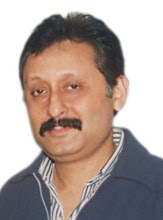
Aravinda de Silva, superb, compact technique coupled with exhilarating strokeplay. Excerpt from Indra Vikram Singh’s book ‘Don’s Century’


Sri Lanka’s Aravinda de Silva, on the other hand, was a gifted batsman. During the early stages of his career he would play brilliant cameos before throwing his wicket away through poor shot selection. For this he was called ‘Mad Max’. Gradually he learnt to temper himself and matured into one of the most exciting strokeplayers of modern times. In many ways, one felt, he was a more aggressive version of Gavaskar.

In fact the Indian maestro was initially an attacking player, with a penchant for the hook shot. But after the first flush of his memorable maiden series, when success became harder to come by, Gavaskar developed into an accumulator of runs, rather than a destroyer of bowling. De Silva retained the sparkle, though it has to be said that he was a middle-order batsman who could indulge in strokeplay with greater freedom than Gavaskar whose primary task was to see off the new ball and take away the sting from those menacing pacemen. Gavaskar and de Silva were of similar stature, maybe the latter was even a wee bit shorter, both compact and well balanced and similarly correct in strokeplay.

De Silva would drive in glorious fashion through the covers, or cut off the back foot, and was quick to hook or pull the short ones. When he got into the groove he was liable to pull off a string of big scores. His highest Test score of 267 came against New Zealand in 1990-91, the same match in which Martin Crowe registered his personal best of 299. De Silva scored centuries in each innings of a Test twice, against Pakistan at the Sinhalese Sports Club, Colombo in 1996-97, when he was unbeaten in both innings, and against India on the same ground the next season.

His most prolific year was 1997 when he amassed 1220 runs at an average of 76.25 with 7 hundreds, the most since Vivian Richards got as many 21 years earlier. In his 93 Tests, de Silva logged up 6361 runs at an average of 42.97 with 20 centuries.

The 1996 World Cup was memorable for de Silva’s superb strokeplay. His 91 against Zimbabwe was followed by 145 versus Kenya, the highest for Sri Lanka in a One-dayer. In the semi-final he hit 66 of the 85 runs scored while he was in, against India. In the final he brought up victory with his unbeaten 107. That was in addition to his stint of three for 42 with the ball. He was man-of-the-match in the semifinal as well as final. If the player-of-the-tournament award had not been decided before the semi-finals, it would surely have gone to de Silva. In the latter half of the nineties, de Silva was doubtlessly one of the three best batsmen in the world, the others being Tendulkar and Lara. There is nothing more to be said.

(Author Indra Vikram Singh can be contacted on email singh_iv@hotmail.com).

Don’s Century

Published in India by Sporting Links

ISBN 978-81-901668-5-0

Fully illustrated

Paperback French Fold 11 x 8.5 x 0.4 inches

Weight 480 grams

188 pages


Available on Amazon at an attractive price: https://www.amazon.in/dp/8190166859  

Indra Vikram Singh's other books available on Amazon: https://www.amazon.in/s?k=Indra+Vikram+Singh&i=stripbooks&rh=p_6%3AA3HSV0N9AV7NOK&dc&qid=1602408830&rnid=1318474031&ref=sr_nr_p_6_1

Sunday, March 23, 2014

Wills Cricket World Cup 1996 - Rampaging Lankans storm their way to the pinnacle : Excerpt from ‘The Big Book of World Cup Cricket 1975-2011’ by Indra Vikram Singh


The sub-continent had the honour of staging the tournament once again in 1996. This time three nations - India, Pakistan and Sri Lanka - played host. Now the top three associate members vied with nine teams from the big league. For the first time teams like ICC Trophy 1994 winners United Arab Emirates, Holland and Kenya made their appearance. Kenya had been represented in 1975 in the East Africa team. Now they were an entity by themselves.

Wills were the sponsors of this edition. The amount paid by them for title sponsorship only was Rupees 552 million ($12.8 million).  It was cricketing heritage to the fore with a 28-inch sterling silver trophy, conceived and designed in 1882 specifically for the game of cricket by the 200-year-old Garrard and Company of London, the Crown jewellers. The trophy has etchings of a painting done in 1785 depicting a cricket match in progress. The painting adorns a wall of the cricket museum at Lord's.

That Sri Lanka, a team listed along with the minnows not long ago, lifted the exquisite trophy in a masterly display at Lahore, was evidence of the fact that the game had touched new frontiers.

The mascot for the tournament was an animated cricket ball named "Googlee", designed by Hindustan Thompson Associates. The sponsors described the mascot as a "reflection of the refreshing resurgence of a fine cricketing art - leg-spin bowling - within which the googly is the perfect symbol for intrigue, unpredictability, and the courage to dare to be different."

By now satellite television had ensured that cricket became a global sport. Unimagined sums were raked in by way of television rights, to vie with gate money in the revenue stakes. It was estimated that two million people watched the matches at the grounds, but two billion saw them on television during the 1996 World Cup, a quarter of these in India alone. No wonder World Tel paid $10.7 million plus 75 percent of the profits, totalling $22 million, for worldwide television rights that they in turn sold to various channels.

Instadia advertising rights were bought by Gokul Finance for Rs.150 million ($4 million). Professional Managment Group (PMG) helped sell these advertisement boards. Sightscreens and other instadia advertisements raked in another $1.5 million. The average gate collections are believed to have been around Rupees 10 million ($267,000) per match.

Marketing of the World Cup soared to amazing peaks. The official suppliers reportedly paid $8 million, with Coca Cola pouring in $3.7 million plus $340,000 for hoardings. Visa, Wimpy's and Indian Overseas Bank paid $350,000 each. Others like Taj Group of Hotels, Indian Airlines, Tradewings, PCL Computers and Fuji Film offered various packages. International Management Group (IMG) shelled out $4 million for hospitality tents that they put up in 17 venues across India.

The prize money totalled £200,000 ($324,000), with the winners receiving £30,000 ($48,600), and the runners-up £20,000 ($32,400). The losing semi-finalists received £10,000 ($16,200) each, while the losing quarter-finalists took home £5,000 ($8,100) each. The award for the man-of-the-tournament was an Audi A4 car, which was won by Sri Lanka's scintillating opening batsman Sanath Jayasuriya.


Guarantee money of $405,000 each was paid to Test-playing nations, and $202,500 each to associate members. Even associate members that did not play this tournament received $162,000 each.

The teams were again divided into two groups. Group A comprised Australia, India, Kenya, Sri Lanka, West Indies and Zimbabwe. In Group B were England, Holland, New Zealand, Pakistan, South Africa and the United Arab Emirates. For the first time there was a quarter-final stage, and the teams that did not make it were Holland, Kenya, the United Arab Emirates and Zimbabwe. The semi-finals were contested between Australia and the West Indies, and India and Sri Lanka. Australia advanced to the final along with Sri Lanka, and the rest is history.

The final:
Gaddafi Stadium, Lahore, 17 March 1996
Sri Lanka won by 7 wickets
Australia: 241 for 7 wickets in 50 overs (Mark Taylor 74, Ricky Ponting 45, Michael Bevan 36 not out, Aravinda de Silva 3 for 42)
Sri Lanka: 245 for 3 wickets in 46.2 overs (Asanka Gurusinha 65, Aravinda de Silva 107 not out, Arjuna Ranatunga 47 not out)
Man of the Match: Aravinda de Silva
Player of the Tournament: Sanath Jayasuriya

(Author Indra Vikram Singh can be contacted on email singh_iv@hotmail.com).

The Big Book of World Cup Cricket 1975-2011
ISBN 978-81-901668-4-3

Distributed in India by Variety Book Depot, Connaught Place, New Delhi, Phones + 91 11 23417175, 23412567

Available in leading bookshops, and online on several websites.

Monday, August 12, 2013

Excerpts from Indra Vikram Singh's book 'Don's Century' ..... 26 - Chapter 7 : PEERLESS RUNGETTER AND OTHER MASTERS OF THE WILLOW (31. Aravinda de Silva)


Sri Lanka’s Aravinda de Silva, on the other hand, was a gifted batsman. During the early stages of his career he would play brilliant cameos before throwing his wicket away through poor shot selection. For this he was called ‘Mad Max’. Gradually he learnt to temper himself and matured into one of the most exciting strokeplayers of modern times. In many ways, one felt, he was a more aggressive version of Gavaskar.

In fact the Indian maestro was initially an attacking player, with a penchant for the hook shot. But after the first flush of his memorable maiden series, when success became harder to come by, Gavaskar developed into an accumulator of runs, rather than a destroyer of bowling. De Silva retained the sparkle, though it has to be said that he was a middle-order batsman who could indulge in strokeplay with greater freedom than Gavaskar whose primary task was to see off the new ball and take away the sting from those menacing pacemen. Gavaskar and de Silva were of similar stature, maybe the latter was even a wee bit shorter, both compact and well balanced and similarly correct in strokeplay.

De Silva would drive in glorious fashion through the covers, or cut off the back foot, and was quick to hook or pull the short ones. When he got into the groove he was liable to pull off a string of big scores. His highest Test score of 267 came against New Zealand in 1990-91, the same match in which Martin Crowe registered his personal best of 299. De Silva scored centuries in each innings of a Test twice, against Pakistan at the Sinhalese Sports Club, Colombo in 1996-97, when he was unbeaten in both innings, and against India on the same ground the next season.

His most prolific year was 1997 when he amassed 1220 runs at an average of 76.25 with 7 hundreds, the most since Vivian Richards got as many 21 years earlier. In his 93 Tests, de Silva logged up 6361 runs at an average of 42.97 with 20 centuries.

The 1996 World Cup was memorable for de Silva’s superb strokeplay. His 91 against Zimbabwe was followed by 145 versus Kenya, the highest for Sri Lanka in a One-dayer. In the semi-final he hit 66 of the 85 runs scored while he was in, against India. In the final he brought up victory with his unbeaten 107. That was in addition to his stint of three for 42 with the ball. He was man-of-the-match in the semifinal as well as final. If the player-of-the-tournament award had not been decided before the semi-finals, it would surely have gone to de Silva. In the latter half of the nineties, de Silva was doubtlessly one of the three best batsmen in the world, the others being Tendulkar and Lara. There is nothing more to be said.


(Author Indra Vikram Singh can be contacted on email singh_iv@hotmail.com).

Indra Vikram Singh’s latest books 
published by Sporting Links:
A Maharaja’s Turf   ISBN 978-81-901668-3-6
The Big Book of World Cup Cricket   ISBN 978-81-901668-4-3
Don’s Century   ISBN 978-81-901668-5-0
Crowning Glory   ISBN 978-81-901668-6-7

Available online on several websites.
Distributed in India by :  
Variety Book Depot 
AVG Bhawan, 
M-3, Middle Circle, Connaught Circus,
New Delhi-110 001, India. 
Tel. + 91 11 23417175, 23412567.