Saturday, June 8, 2013

Excerpts from Indra Vikram Singh's book 'Don's Century' ..... 21 - Chapter 7 : PEERLESS RUNGETTER AND OTHER MASTERS OF THE WILLOW (26. Greg Chappell)


In the 1950s and 1960s, England possessed an array of top-class batsmen, the classic Peter May, the podgy timer Colin Cowdrey, the cheerful and reliable Ken Barrington, the dashing and aristocratic Ted Dexter, and one of the most graceful strokeplayers ever Tom Graveney. Australia had the famous opening pair Bobby Simpson and Bill Lawry, and the stylish Norman O’Neil.

Cricket was now entering a new epoch. The 1970s and 1980s should be regarded as the Modern Golden Age of Cricket for the sheer quality of players, and the sweeping changes that took place in the game. The process began during the 1970-71 Ashes series. From Australia emerged three players who were to become true greats, fast bowler Dennis Lillee, wicketkeeper Rodney Marsh and middle-order batsman Greg Chappell. Quite by accident, the first One-day International was played at the Melbourne Cricket Ground during the course of this series, just as the first-ever Test match had been in 1877. A few months later in the Caribbean, a diminutive Indian opener Sunil Gavaskar astounded the world by his copious rungetting.

Greg Chappell had class stamped all over him. Tall, upright, elegant with a high backlift, he was one of the finest on-drivers the game has seen. Consistent and unyielding, he has been a serious student of the game. Chappell scored a hundred on Test debut at Perth. He impressed with the amount of time he had to play his strokes even on that fast track against a hostile English pace attack of John Snow, Peter Lever and Ken Shuttleworth. He reached his century amid a flurry of strokes before he was dismissed for 108.

A decade-and-a-half later, in his final Test against Pakistan at Sydney, Greg Chappell needed 68 runs to equal Bradman’s Australian record aggregate of 6996 runs. Chappell passed The Don’s mark, became the first from his country to log up 7000 Test runs, and notched up a century, the only batsman to score hundreds in his first and last innings. He bid adieu to the game with a magnificent 182. Two other greats retired along with him after this Test - Dennis Lillee and Rodney Marsh. They came together and they went together. Call it destiny if you will, but things have a way of unfolding in amazing fashion. Nobody could have planned it that way. The plot is always scripted elsewhere.

When the Rest of the World, replacing South Africa, visited Australia in 1971-72, Greg Chappell was in commanding form, hitting up 425 runs in three matches at an average of 106.25. In the Wellington Test of 1973-74 against New Zealand, Greg Chappell emulated compatriot Doug Walters, Lawrence Rowe and Sunil Gavaskar by scoring a double century and century. Brian Lara emulated the feat in 2001-02. Chappell’s 247 not out and 133, totalling 380 runs, was the highest scored in a Test match until Graham Gooch hit up 333 and 123 against India at Lord’s in 1990. In that Wellington game, elder brother Ian Chappell scored 145 and 121.

In 1975-76 Greg Chappell took over the Australian captaincy from Ian. It was a keenly-awaited six-Test series between the 1975 One-day World Cup champions West Indies and runners-up Australia, a terrific match-up between classy batting line-ups and fearsome pace attacks. The Aussies prevailed and how; they walloped Clive Lloyd’s side 5-1, the only defeat being at Perth where Roy Fredericks blazed to that scintillating 169. Greg Chappell hit a hundred in each innings again, 123 and 109 not out at Brisbane. In the Sydney Test he hit up an unbeaten 182.

Kerry Packer intervened for two seasons between 1977-79 and Chappell was lost to the international game, like so many other stalwarts. He returned to captain Australia, later only in home series. A useful medium-pace change bowler, Chappell was a composed fielder, particularly in the slips. If his grandfather, former Australian captain and Bradman contemporary, Victor Richardson, was the first fielder to take five catches in a Test, against South Africa at Durban in 1935-36, Greg Chappell was the first to pouch seven in the same Test, against England at Perth in 1974-75. He finished with 122 Test catches, surpassing Colin Cowdrey’s record of 120. Later several others held more, with Rahul Dravid being the current record-holder with 207 catches in 157 Tests.

The one faux pas in his career was when as captain he asked the bowler, his younger brother Trevor, to underarm the last delivery of the third One-day final of the World Series Cup against New Zealand on February 1, 1981. There was massive public outrage and the New Zealand prime minister shot off a telegram to his Australian counterpart, accusing the Aussie team of cowardice. The fallout was that underarm bowling, eclipsed since the days of a young W.G. Grace, was finally consigned to the pages of history. Chappell was crucified. This singular mindless act has sometimes returned to haunt Greg Chappell, but was really an aberration in the career of a dignified batsman. He finished with 7110 runs in 87 Tests, 24 hundreds and an average of 53.86. Greg Chappell was a class act.

The statistics in the book are updated till 27th August 2011.

(Author Indra Vikram Singh can be contacted on email singh_iv@hotmail.com).

Sunday, June 2, 2013

Excerpts from Indra Vikram Singh's book 'Don's Century' ..... 20 - Chapter 7 : PEERLESS RUNGETTER AND OTHER MASTERS OF THE WILLOW (The South African greats 24. Graeme Pollock and 25. Barry Richards)


The South African Graeme Pollock was also a top-class left-handed strokeplayer like Sobers, but that is where the comparison ended. In almost every other way Pollock was different. Tall, strongly built and seemingly laboured, he was not athletic, unlike Sobers, and it showed in his running between wickets, and fielding, where he was at best a safe catcher. Stooping low into his stance, with legs spread apart, the power in his shots came from timing, quite the anti-thesis of Sobers who had a big backlift and played his shots with a flourish.

Pollock was also considered primarily an off-side player, like another big man Wally Hammond, but could get the ball away on the on-side, particularly with his short-arm pull shots. His 3 lb bat, very heavy for those times, was like a club as he drove and cut in awesome fashion. Inzamam-ul-Haq was perhaps, in some ways, a mirror image of Graeme Pollock for their laidback style, but that was an illusion because they spotted the ball early and had plenty of time to play their strokes. That explained their unhurried movements. The Pakistani batsman though was more aesthetic, with footwork quite nimble for a burly physique, and apt to hit straighter.    

Prodigiously talented, one of Pollock’s finest innings was at Nottingham in 1965. With the ball seaming around, South Africa were reduced to 80 for five. He put on 98 with skipper Peter van der Merwe, whose contribution was 10. Pollock slammed the English bowlers for 21 boundaries all over Trent Bridge, clocking up 125 runs off 145 balls.

His finest hour came at Durban in 1970. In the company of Barry Richards, he flayed the Australian attack. Pollock went on record the highest Test score for South Africa, a tremendous 274 that demoralised the opposition. At 26 years he was at the height of his powers when, soon after, South Africa were banished from Test cricket for their policy of apartheid. It was a cruel blow, for Pollock had aggregated 2256 runs in only 23 Tests for an average of 60.97, the best-ever barring Bradman, among those who have played at least 20 innings.

Barry Richards suffered an even worse fate. That was the only Test series he got to play. In those four games he scored 508 runs, averaging 72.57, with two hundreds. His highest of 140 was in that scintillating stand with Graeme Pollock at Durban when they blasted 103 runs in an hour after lunch on the first day. Richards reached his century in the first over after lunch off just 116 deliveries. Several observers have rated him among the best batsmen ever. Brian Johnston watched him at close quarters, not only in that 1969-70 home series against Australia, but for long years in county cricket for Hampshire, where his opening partner was a West Indian named Gordon Greenidge.

Johnston wrote in It’s Been a Piece of Cake: “He had, and played, every stroke off the front foot and the back. With a high backlift he played beautifully straight, and used his feet far more than the others I have mentioned (Sobers, Hutton, May, Cowdrey, Greg Chappell and Viv Richards), with the exception of Bradman, Hammond and Compton. He would even dance down the wicket to the fast bowlers. Barry’s technique was backed by his supreme confidence in his own ability, and an insolent contempt for all bowlers.” The little master himself, Sunil Gavaskar, made a telling observation in The Times of India in 1995: “Barry Richards was the first batsman I saw playing the lofted shot over extra-cover. This was in the Sunday League in England in 1971. Till he demonstrated how to do it, batsmen tended to hit the ball over the infield on the legside if they wanted quick runs. The inside-out shot over extra-cover is more difficult, for one has to really get to the pitch of the ball to be able to hit it away from the fielders. Since there used to be no fielders posted on the extra-cover boundary, it was easy to pick up boundaries there and soon this shot was being copied by other batsmen effectively and is now a normal shot in all kinds of cricket.” That is a stamp of genius.  

In his very first season for Hampshire in 1968, Richards topped their run chart with 2395 runs. The next highest for the county was by Barry Reed with a tally of 990. He scored heavily each year in county cricket, though he had moderate success for the Rest of the World, who replaced the banned South African team, for the 1970 tour of England. Richards went Down Under to play in the Sheffield Shield, and he was sensational. In 1970-71, he hit up 356 for South Australia against Western Australia, 325 of which were scored on the first day of the match. In 1977 he signed up for Kerry Packer’s World Series Cricket. Even though he was past his prime, Richards performed exceedingly well, confronted as he was with quality opposition once again.

It is, therefore, not altogether a surprise that Bradman chose him to partner Arthur Morris in his All Time XI. For a man of Richards’ calibre it became increasingly difficult to motivate himself to continue playing the inferior trundlers at the first-class level. He walked away from it all, frustrated at being kept out of Test cricket.

Graeme Pollock and Barry Richards were part of a brilliant South African team that continued the process begun by the supremely talented West Indies teams led by Frank Worrell and Gary Sobers, and finally and emphatically did away with the supremacy of England and Australia for the first time in the 90-year history of Test cricket. Under Peter van der Merwe and Ali Bacher, South Africa defeated England 1-0 in 1965 in an away series, and then trounced Australia twice at home, 3-1 in a five-Test series in 1966-67, and a 4-0 whitewash in 1969-70. Coming off a comfortable 3-1 triumph in India, Bill Lawry’s Australian side was handed a mauling of frightening proportions by the South Africans. The margins of defeat were 170 runs, innings and 127 runs, 307 runs, and 323 runs. It was humiliating, to put in kindly, and a far cry from the heady days of Bradman. South Africa could now justifiably claim to being the no. 1 Test team in the world, even as their apartheid regime resulted in prevention of face-offs with the ‘coloured’ nations.

The nucleus of the 1965-70 South African teams comprised the allrounders, former skipper Trevor Goddard and Eddie Barlow, arguably the greatest-ever cover fielder Colin Bland, wicketkeeper-batsman Dennis Lindsay, pace duo of Graeme’s elder brother Peter Pollock and the wrong-footed in-swinger Mike Procter, who was also a tremendous batsman, and two star rungetters Graeme Pollock and Barry Richards. It is such a pity that their Test careers had to be halted abruptly in their prime.

(Author Indra Vikram Singh can be contacted on email singh_iv@hotmail.com).

Sunday, May 26, 2013

Excerpts from Indra Vikram Singh's book 'Don's Century' ..... 19 - Chapter 7 : PEERLESS RUNGETTER AND OTHER MASTERS OF THE WILLOW (23. Gary Sobers)


Just as the memorable careers of the three Ws were drawing to a close, there appeared on the stage a cricketer blessed by nature like no other. Inarguably the most versatile and complete player, with class stamped all over, the left-handed genius Garfield Sobers was the only one apart from Bradman who would walk into everybody’s all-time dream team. To state the obvious, Sobers was a powerful strokeplayer, predecessor to Brian Lara in myriad ways, not the least in hitting up the record score and highest aggregate in Test cricket; bowler of greater variety than anyone in history - genuine speed, medium-pace swing, left-arm orthodox as well as chinaman; and a superb fielder, particularly close to the wicket in the slips or at backward short-leg.  Like Bradman, the game is not likely to see another with his amazing skills.

The doyen himself, Sir Neville Cardus, described Sobers’ batting thus: “He makes a stroke with moments to spare. The sure sign of mastery, of genius of any order, is absence of strain, natural freedom of rhythm.” How aptly can this be applied to sportspersons of any discipline. Brian Johnston, legend in the commentary box, observed Sobers for years. He wrote in his book It’s Been a Piece of Cake: “…..like all the greats - he had a sound defensive technique, but in attack with a high backlift and perfect timing the power of his strokes had to be seen to be believed. His sizzling drives and crashing hooks were hammered to the boundary, leaving the fielders helpless to stop them.”

Sobers never wore a thigh pad, and except for early in his career had no use for a cap, batting or fielding. His rasping cuts were facilitated by a light bat weighing around 2 lb 4 oz. There was no less power in his shots than seen today by those wielding the chunky modern day bludgeons. That is one of the reasons why there are not many players today who can play genuine horizontal bat shots like the cut, pull and hook with authority. Sobers rarely went down the wicket to the spinners, either using his long reach to drive or playing right back.

For someone who was pitchforked into the Test arena as a 17-year-old left-arm spinner in 1953-54 after just two first-class appearances, it is quite amazing that Sobers went on to become one of the greatest batsmen in history. Four years after his debut, he recorded his first Test hundred against Pakistan at Kingston, an unbeaten 365, the top score at the highest level, surpassing Len Hutton’s mark of two decades earlier. He added 446 for the second wicket in the company of Conrad Hunte, just five runs short of the then all-time high for any wicket put up by Ponsford and Bradman in 1934. Sobers celebrated his achievement by hammering a century in each innings - 125 and 108 not out - in the Georgetown Test. He finished the series with 824 runs at an average of 137.33. The legend of Sobers had been launched.

In 1959-60 against England, Sobers hit up 709 runs at an average of 101.28, crashing 226 at Bridgetown, 147 at Kingston and 146 at Georgetown. He put on 399 for the fourth wicket with Worrell in the Georgetown Test. Though a natural successor to Worrell, Sobers was not as diligent a captain as Bradman. From 1966 to 1967-68, Sobers had a golden run with the bat, averaging over 100 in two successive series, and 90 in the third. During the 1966 tour of England, he scored 722 runs at an average of 103.14 in five Tests, took 20 wickets at 27.25 apiece and held 10 catches. England were again given a 3-1 hammering, and Sobers once more hit up three centuries - 161 at Old Trafford, 163 not out at Lord’s and 174 at Headingley. He then went to India in 1966-67, scoring half-centuries in all his five innings with a highest of 95, aggregating 342 runs and averaging 114. By now the West Indies were the best side in the world. In 1967-68 against England at home, Sobers knocked up 545 runs in five Tests at 90.83 per innings but his over-confident declaration in the fourth Test at Kingston - 215 to win in 165 minutes - handed the series to England, who won that game with three minutes to spare, and the crown slipped.

The irrepressible Sobers became the first batsman in first-class cricket to hit 6 sixes in an over for Nottinghamshire against Glamorgan, smashing a bewildered Malcolm Nash at St Helen’s Ground, Swansea in 1968. It was in the evening of his career that Sobers played what Sir Donald Bradman described as the best innings he had seen in Australia, comparing it to Stan McCabe’s superb 232 at Trent Bridge in 1938. He slammed 254 for the Rest of the World against Australia at Melbourne in 1971-72 against a young and lightning fast Dennis Lillee. It was an amazing display of pyrotechnics, and when it reached its crescendo, rousing applause came from the spectators and fielders alike. 

When a damaged knee ended his 20-year Test career, Sobers had become the highest rungetter in his 93 appearances with 8032 runs at an average of 57.78, having blazed 26 hundreds, second behind Bradman’s 29. He had captured 235 wickets at 34.03 each, and snapped up 109 catches. It would be fair to say that had he batted higher than the no. 6 that he often did as captain, and if the West Indies did not have bowlers of the calibre of Wesley Hall, Charlie Griffith and Lance Gibbs, Sobers would have had many more runs and wickets to his credit. Gary Sobers was a cricketer beyond compare. It was just a matter of time before knighthood was bestowed on him.

(Author Indra Vikram Singh can be contacted on email singh_iv@hotmail.com).

Monday, May 20, 2013

Excerpts from Indra Vikram Singh's book 'Don's Century' ..... 18 - Chapter 7 : PEERLESS RUNGETTER AND OTHER MASTERS OF THE WILLOW (22. Hanif Mohammad)


From another corner of the earth came Hanif Mohammad. Renowned for occupying the crease for long periods, he surpassed Bradman’s record first-class score of 452 not out, piling up 499 runs for Karachi versus Bahawalpur in 1958-59 on home ground before running himself out in his quest to reach a milestone that only Brian Lara did 35 years later. Hanif was a prodigy and by far the best Pakistan batsman of his time. Hailing from a family of five cricketing brothers, four of whom played for Pakistan - Hanif’s son Shoaib too played Test cricket - Hanif’s name was synonymous with Pakistani batting until the likes of Majid Khan, Zaheer Abbas and Javed Miandad began performing their sterling deeds on the international stage.

If Sachin Tendulkar toured Pakistan in 1989 at the tender age of sixteen, Hanif had came to India as a regular opener with his country’s first Test team in 1952-53 when he was just seventeen. In the inaugural first-class match against North Zone, Hanif scored 121 and 109 not out. Later he made a superb unbeaten 203 versus Bombay. He showed immense promise in the five Tests, scoring 51 on debut at the Ferozshah Kotla. He was unlucky to miss his maiden Test hundred by just four runs in the third Test at the Brabourne Stadium, and carved out another half-century in the final Test at the Eden Gardens.                             

The epitome of sound technique and intense concentration, he left such a profound impression on Indian minds that, it is said, the distinguished Bombay coach Vasu Paranjpe used him as a model when he was mentoring Sunil Gavaskar in the 1960s. It is a fascinating tale of the two little masters of the sub-continent, and Hanif went on to establish several records for his country. He played what is still the longest innings in Test cricket, against the West Indies at Bridgetown in 1957-58, progressing to 337 in what is officially accepted as 16 hours and 10 minutes, but what was earlier believed - and still maintained by Hanif - to be 16 hours and 39 minutes. In first-class cricket, Himachal Pradesh captain Rajiv Nayyar played a longer innings against Jammu and Kashmir at Chamba only in 1999-2000, occupying the crease for just five minutes under 17 hours in his leisurely 271.

Hanif notched up centuries in each innings - 111 and 104 - of the Dacca (now Dhaka) Test of 1961-62 against England. His 12 Test hundreds were a record for his country at the time, as was his aggregate of 3915 runs at an average of 43.98 in his 55 Tests, 11 as captain. In first-class matches Hanif logged up the most runs in a Pakistan season, 1250 at an average of 59.52 in 1961-62. Hanif was indeed the pioneer among classy Pakistani batsmen and in terms of technical proficiency the forbear to Mohammad Yousuf.

(Author Indra Vikram Singh can be contacted on email singh_iv@hotmail.com).

Sunday, May 12, 2013

Excerpts from Indra Vikram Singh's book 'Don's Century' ..... 17 - Chapter 7 : PEERLESS RUNGETTER AND OTHER MASTERS OF THE WILLOW (The unparalleled saga of the three great Ws : !9. Frank Worrell, 20. Everton Weekes and 21. Clyde Walcott)


In the six decades of uninterrupted cricket since the retirement of Bradman, and particularly after the proliferation of the game since the 1970s, several top-class batsmen have delighted spectators around the world. We shall briefly dwell on a chosen few, not necessarily for the runs they scored or the averages they achieved, but for their dominance, quality of strokeplay, elegance, courage, resilience in battling the odds and impact on the game.

There is no parallel in world cricket to the saga of the four Ws – Worrell, Weekes and Walcott of the West Indies. These great Barbados batsmen were born, remarkably, within a radius of three miles in a span of 18 months. They made their Test debut in the same series against England in 1947-48, which the West Indies won 2-0, and all three were knighted at various stages.

Frank Worrell was a calm, stylish strokeplayer, left-arm medium-pace swing bowler, and first coloured captain of the West Indies, rated among the great leaders, a true statesman of the game. Of his highest Test score of 261 against England at Trent Bridge in 1950, 239 runs were scored in a day. England were handed a 3-1 drubbing on home turf. Indeed Worrell sculpted six of his nine Test hundreds off the English bowlers in five different series at home and away, once carrying his bat for an unbeaten 191.

Worrrell became the only batsman in first-class cricket to be associated in two partnerships of 500 or more, both unbroken for the fourth wicket representing Barbados against Trinidad. In 1943-44, at 19 years the youngest to score a triple century, an unbeaten 308, he put on 502 with John Goddard. Two seasons later, he raised 574 with Clyde Walcott. Worrell was the odd man out among the three Ws in missing out on a Test average of 50. He came within touching distance, finishing at 49.48 per innings for his 3860 runs in 51 Tests.

The 1960-61 series in Australia, when Worrell took over the captaincy, was one of the most thrilling in history, not just for the first tied Test at Brisbane, but also for the competitiveness and wonderful spirit in which it was played. The West Indies lost 1-2, but were accorded a memorable farewell in an open motorcade. From here on, all series between Australia and the West Indies came to be played for the Frank Worrell Trophy. In 1963 his team gave a 3-1 thrashing to England, finally ending the hegemony of the two founder members of the Imperial Cricket Conference. Worrell’s untimely death in 1967, just after a memorable post-retirement tour to India, some of which comprised delightful moments in the commentary box, came as a rude shock to cricket lovers all over the world.

The diminutive Everton Weekes was a scintillating strokeplayer, quick on his feet and particularly strong on the off-side. He scored hundreds in five consecutive Test innings, beginning with the fourth and final match of his first series, as he hit up 141 against England at Kingston in 1947-48. Then during the tour to India in 1948-49, Weekes scored 128 at Delhi, 194 at Bombay, and a century in each innings - 162 and 101 - at Calcutta. In his next outing at Madras, he was run out for 90, the West Indies winning the only Test that produced a result in the series. For good measure, Weekes scored 56 and 48 in the final Test, back at the Brabourne Stadium. He set the pattern as the West Indies won the toss in all five matches and batted first on easy-paced wickets. The bulk of the bowling was done by the spin twins, left-armer Vinoo Mankad and off-spin exponent Ghulam Ahmed, with one medium-pacer of some quality being Dattu Phadkar. It was, nevertheless, a triumph of concentration, patience and brilliant strokeplay, as Weekes logged up 779 runs in the series at an average of 111.28.       

When it was the turn of the Indians to make a return tour of the Caribbean islands four years later, Weekes was just as severe on their hapless bowlers. By now leg-spinner Subhash Gupte had joined Mankad. Again the West Indies triumphed 1-0, with the lone win coming at Bridgetown. Weekes scored 207 at Port of Spain, 47 and 15 in the relatively low-scoring game at Bridgetown, 161 and 55 not out again at Port of Spain, 86 at Georgetown, and 109 and 36 at Kingston. That was a total of 716 runs at 102.28 per innings.

Weekes scored three centuries in the 1955-56 series in New Zealand. But, like Neil Harvey, he did not replicate such successes when confronted by the stronger attack of England, as also Australia, never scoring more than one century in any series against them. On his first tour of England in 1950, though, in first-class matches Weekes scored a triple century and four double centuries. Only Bradman had six scores of 200 or more on an English tour two decades earlier. In 48 Tests Weekes scored 4455 runs at an average of 58.61, notching up 15 hundreds.

Big and strong, Clyde Walcott was a savage hitter, renowned for his back-foot driving. C.L.R. James noted in his Beyond a Boundary: “For defence and power in putting away the length ball this is one of the greatest of all batsmen. Only Bradman can be mentioned in the same breath for commanding hooking of fast bowlers.” Like Weekes, he revelled on the Indian tour of 1948-49, cracking 452 runs at an average of 75.33. His greatest run, however, was when Australia came calling in 1954-55. Walcott hit a century in each innings of not one, but two Tests - 126 and 110 at Port of Spain, and 155 and 110 at Kingston. No one else has achieved this feat in the same series. Before that he had scored 108 in another Test at Kingston. Not even Bradman had managed five hundreds in the same rubber. Walcott’s tally in that series was 827 at 82.70 per innings. This capped his consistent showing at home; during the previous two seasons he was a prolific scorer against England and India.

Along with Weekes, he feasted on the Indian bowling. Not to be left out, Worrell finally joined the party with his 237 at Kingston in 1952-53. Walcott eventually finished with 3798 runs at an average of 56.68 in 44 Tests, matching Weekes’ 15 tons, and his wicketkeeping abilities were a bonus. One of the reasons why he retired in 1959 at the age of thirty-three was that, as the celebrated C.L.R. James noted in his Beyond a Boundary, he was frustrated at the continued appointment of only a white man as captain of the West Indies. So when his great mate Frank Worrell eventually led the West Indies shortly thereafter, the big hitter would have been a satisfied, if not totally contented, man. That feeling would have grown when Walcott himself went on to become president of the West Indies Cricket Board and chairman of the International Cricket Council (ICC).        

Overall, Worrell stood up to England, the best side for much of the 1950s before his own team turned the tables; Weekes was the scourge of India; and Walcott was awesome on home turf. Put together, they appeared in 143 Tests for the West Indies and amassed 12,113 runs at an average of 54.80, notching up 39 hundreds. For those times when much less Test cricket was played than at present, it was a phenomenal performance. Few chapters in the game are as romantic and colourful. It was the three inimitable Ws, aided by the spin twins Sonny Ramadhin and Alf Valentine who put Caribbean cricket on the high road to the summit that later outfits led by Gary Sobers, Clive Lloyd and Vivian Richards scaled in the next three decades. George Headley was, of course, the pioneer, and the enormously talented Learie Constantine with his fellow speedster Manny Martindale had shown early glimpses of the fearsome pace battery that was to follow. But it was Worrell, Weekes and Walcott who set the trend for top-class West Indies line-ups of succeeding generations - Hunte, Kanhai, Butcher, Sobers and Nurse; Lloyd, Rowe and Kallicharran; Greenidge, Haynes and Richards; Richardson, Lara and Chanderpaul to carry forward the tradition. The Ws propelled West Indies cricket towards glory, and that is their true contribution.

(Author Indra Vikram Singh can be contacted on email singh_iv@hotmail.com).

Saturday, May 4, 2013

Excerpts from Indra Vikram Singh's book 'Don's Century' ..... 16 - Chapter 7 : PEERLESS RUNGETTER AND OTHER MASTERS OF THE WILLOW (18. Left-handed Australian opener Arthur Morris)


It would be pertinent to discuss one more batsman of the Bradman era, his compatriot, the left-handed Arthur Morris, whom The Don chose in his all-time dream team to open with Barry Richards. It was with Morris that Bradman put on 301 for the second wicket in the famous run-chase at Headingley in 1948. They got together after Lindsay Hassett fell at 57, and set up the magnificent victory, the first time that a side scored 400 in the fourth innings to win a Test. Morris made 182 before he was dismissed on the very threshold of the historic triumph.

The perceptive Bradman always had immense faith in Morris. A brilliant strokeplayer all round the wicket, Morris made a century in each innings on his first-class debut against Queensland at Sydney in 1940-41 as an 18-year-old. But he fared poorly on first appearance in Tests against Australia in 1946-47, managing only 2 runs at Brisbane, and 5 at Sydney. Bradman, though, persisted with him and the youngster repaid his skipper’s faith in abundant measure. Morris delighted the crowds in the next two Tests. He scored 155 at Melbourne, and then a hundred in each innings - 122 and 124 not out - at Adelaide. It was, after all, a glorious initiation in top grade cricket.

Eight of Morris’ 12 Test hundreds came against England, three in the 1948 series, when he topped Australia’s averages with 87, having hit 696 runs; Bradman averaged 72.57 for his 508 runs. Morris scored Test hundreds in South Africa and the West Indies, and also against India at home. In his 46 Tests he aggregated 3533 runs at an average of 46.48, with a top score of 206. Bradman probably wanted a classy left-handed strokeplayer to open his All-time XI, which is why he included Morris.

Had the great man lived longer, he might have been tempted to consider Matthew Hayden, who only began his ascent to the pinnacle on the Indian tour of 2001 just after The Don passed away. After a close look at Morris’ career, one can see Bradman’s point, even though many might still not agree. It takes quite a lot to bypass the claims of the likes of Grace, Trumper, Hobbs, Hutton and Gavaskar, even if they were all right-handers.

(Author Indra Vikram Singh can be contacted on email singh_iv@hotmail.com).

Friday, May 3, 2013

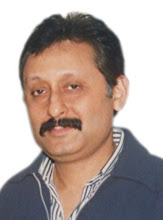
Interpreter of our royal heritage: Feature on Indra Vikram Singh Rajpipla in the New Indian Express

Article in The New Indian Express, April 7, 2012

Interpreter of our royal heritage
by N. Kalyani


It is on a chilly forenoon that I met Indra Vikram Singh in Delhi for a chat. With no airs about him, the scion of the royal family of the erstwhile Rajpipla kingdom in Gujarat, in a sweater — sleeves pulled up — readily autographs A Maharaja’s Turf for me.
Singh has come out with five books — all in 2011 — all collectibles. While four of these, A Maharaja’s Turf, The Big Book of World Cup Cricket, Don’s Century and Crowning Glory, are self-published by his publishing house, Sporting Links, The Little Big Book of World Cup Cricket has been brought out by Media Eight. His earlier books include Test Cricket — End of the Road? and World Cup Cricket.
Grandson of Maharaja Sir Vijaysinhji, the last ruler of Rajpipla, Indra Vikram Singh talks with some nostalgia for times past. “History is not about dates and facts; history requires interpretation. History needs to be revisited,” he says. He points out how the British policy of divide-and-rule found expression even in aspects like the location of palaces of rulers of the princely states vis-a-vis their people. Earlier the rulers built their palaces close to their people. Post-1857, the British made them build their palaces at a distance from the habitation of the people they ruled “to create a gulf between rulers and subjects”. And about Indian rulers who lived a part of the year in Britain, as in the case of his grandfather, in Windsor, he says it was not because “they had the wealth or wished to enjoy cooler climes during summer”, but to interact with the British aristocracy to keep a check on harassment back home in their principalities.
Speaking of the Rajpipla palaces, he is proud of the Vadia palace, built by his grandfather, that was fully air conditioned and had Italian marble floors and Burma teak woodwork. He also points out “the narrow gauge rail line was introduced in Rajpipla by my grandfather. Even the Sardar Sarovar dam was his idea”.
A cricket buff, who captained teams in his school and college (Singh graduated from DU’s Hans Raj College), his four books on the sport are a result of a good deal of research. While Crowning Glory is an account of India’s ICC World Cup 2011 victory, Don’s Century is a biography of the one and only Don Bradman (Singh is the only Indian to have penned a biography of Bradman), and includes a panorama of batting from the 1860s to present times, including other cricket greats like W G Grace, K S Ranjitsinhji and Tendulkar. Ask Singh how he managed to pen these books all at once, and he reveals fascinating details that hint at his inquisitive mind and fetish for collecting and preserving old books, publications, magazines, letters and sundry items from childhood, that provided material for his books. For A Maharaja’s Turf, articles from some 80 newspapers, a scrap book made by a grand uncle and his son, books and film clippings on the historic Derby, all helped in getting the tome ready.  
Besides writing and publishing, Singh is now getting into heritage preservation and heritage tourism. All power to this new-age scion.
http://newindianexpress.com/lifestyle/books/article374143.ece

(Prince Indra Vikram Singh of Rajpipla can be contacted on email teddy.rajpipla@gmail.com).